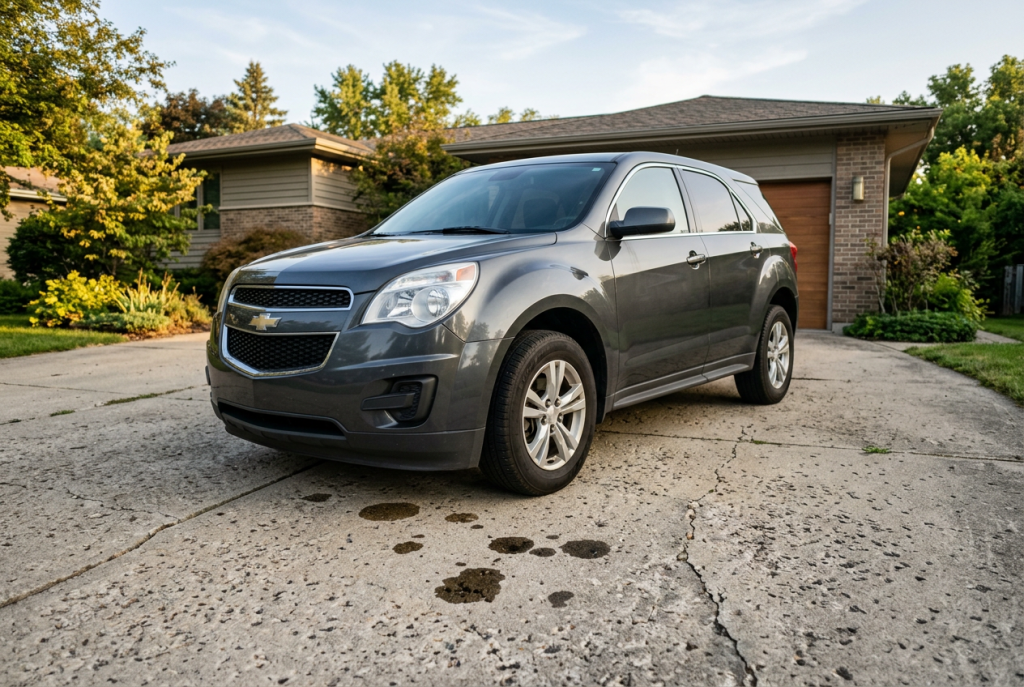
The 2010-2013 Chevrolet Equinox and GMC Terrain with the 2.4L Ecotec engine are known to burn engine oil at an alarming rate, often one quart per 1,000 miles or faster. The most common cause is low-tension piston rings that allow oil to slip past into the combustion chamber, made worse by a clogged PCV orifice and carbon buildup. Left alone, this leads to fouled spark plugs, engine knock, and eventually serious internal damage.
Which Vehicles Have This Problem?
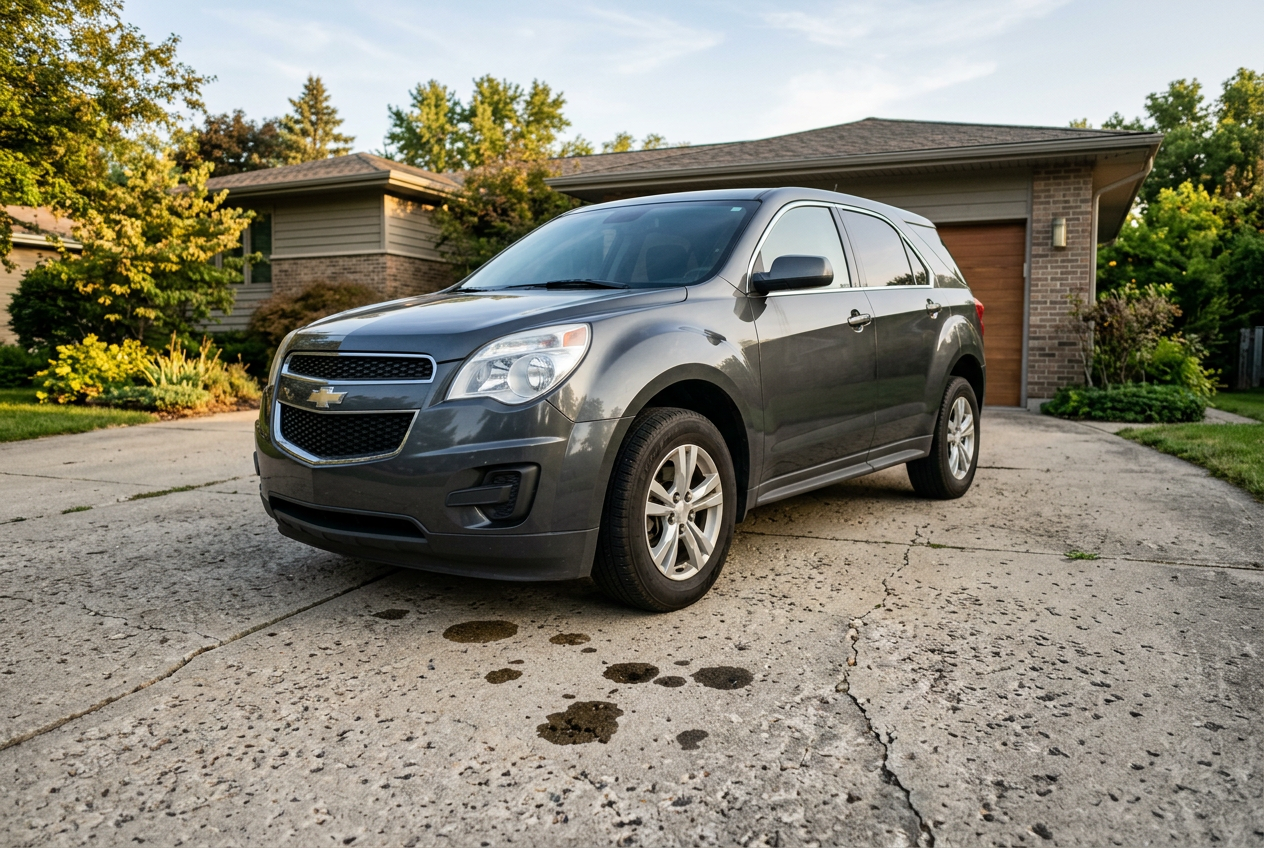
This issue affects the 2010-2013 Chevrolet Equinox and the 2010-2013 GMC Terrain, both equipped with the 2.4L Ecotec four-cylinder engine. If your SUV falls in that year range and has the 2.4L, read on. The 3.0L V6 versions of these same years do not share this specific ring design issue.
What Is Actually Happening Inside the Engine?
The 2.4L Ecotec in these years used piston rings with lower tension than ideal. Lower tension was meant to reduce internal friction and improve fuel economy. The trade-off is that oil works past the rings and burns in the combustion chamber instead of staying in the crankcase.
A second factor is the PCV (positive crankcase ventilation) system. The PCV orifice on this engine is prone to clogging with carbon deposits. When it clogs, crankcase pressure rises and pushes even more oil vapor into the intake, adding to consumption. Carbon buildup on intake valves compounds the problem further.
How Fast Does the Oil Level Drop?
Owners commonly report losing one quart every 1,000 miles, sometimes faster. GM’s own internal threshold for “acceptable” consumption on this engine was approximately one quart per 2,000 miles. Anything faster than that is a sign the rings or PCV system need attention. At one quart per 1,000 miles, a vehicle could lose most of its oil between oil changes if the owner is not checking the dipstick regularly.
What Are the Symptoms at Each Stage?
| Stage | What You Notice | Likely Cause | Urgency |
|---|---|---|---|
| Early | Oil level low at oil change; slight blue smoke on startup | Rings beginning to wear; PCV partially clogged | Schedule service soon |
| Mid | Burning one quart per 1,000 miles; rough idle; faint knock | Worn rings; fouled spark plugs; carbon on valves | Schedule service now |
| Late | Engine knock; misfires; check engine light; heavy blue smoke | Severe ring wear; oil-fouled plugs; possible bearing damage | Do not drive; tow to shop |
Is It Safe to Keep Driving?
In the early stage, you can continue driving if you check the dipstick every time you fill the gas tank and top off oil as needed. Do not go more than a few days without checking. Once you are at the mid stage, with audible knock or misfires, the risk of catastrophic engine damage rises quickly. At the late stage, stop driving and have the vehicle towed. Running an engine low on oil causes bearing damage that turns a $2,000-4,000 repair into an engine replacement.

What Did the Sloan/Berman v. GM Lawsuit Find?
A class action lawsuit, Sloan/Berman v. GM, alleged that GM knew the 2010-2013 Equinox and Terrain 2.4L engines had a design defect causing excessive oil consumption and failed to adequately disclose it to buyers. The settlement received final approval in 2019 and was valued at approximately $42-45 million. The settlement covered qualifying owners who experienced the issue within a defined time and mileage window. The claim period has closed. You can review the settlement details at the source linked below.
This was a civil settlement, not a recall. GM did not issue a free repair campaign through dealers for this issue. If your vehicle is still consuming oil, the repair is an out-of-pocket service at an independent shop or dealer.
What Does the Repair Actually Involve?
There are two levels of repair depending on how far the problem has progressed.
- PCV orifice service: Clean or replace the PCV orifice and clean carbon from the intake valves. This is the first step and should be done regardless of what else is needed. It addresses a contributing cause and is far less expensive than a ring job.
- Piston and ring replacement: If consumption continues after the PCV service, the piston rings themselves need to be replaced. On the 2.4L Ecotec, this is a major job. The engine typically needs to come out of the vehicle. The pistons are removed, the cylinder walls are inspected and possibly honed, and new rings are installed. Spark plugs are replaced at the same time.
If the engine has been run low on oil for an extended period, the connecting rod bearings and crankshaft journals should also be inspected before reassembly. Skipping that inspection risks a repeat failure.
What Does This Repair Cost?
There is no single price without seeing the vehicle, because several things move the number. Here is what affects it:
- PCV service only: Parts are inexpensive; labor is moderate. This is the lower-cost starting point.
- Full piston and ring job: This is a major engine teardown. Labor hours are significant, and parts include pistons, rings, gaskets, seals, and spark plugs at minimum.
- Bearing inspection and replacement: If the engine has been run low on oil, add bearing inspection and potentially main and rod bearings to the parts list.
- Engine replacement: If internal damage is too extensive, a replacement engine (remanufactured or used) may be more cost-effective than a full rebuild. A technician can advise after inspection.
A shop that skips the oil consumption test and goes straight to a ring job without checking the PCV system first is not doing you any favors. The right sequence is: test, diagnose, repair in order of severity.
For drivers running the Highway 218 corridor between Blooming Prairie and Austin regularly, a low oil level is a real risk on those long stretches between towns. A breakdown on a rural two-lane is genuinely inconvenient. Catching this early with a simple dipstick check costs nothing.
Does This Problem Show Up on a Diagnostic Scan?
Oil consumption itself does not always set a DTC. However, the downstream effects do. Oil-fouled spark plugs cause misfires, which can set codes like P0300 (random misfire), P0301-P0304 (cylinder-specific misfires), or related codes. An electronic diagnostic scan is the right first step to see what codes are present and to rule out other causes of rough running before committing to an expensive repair.
How Often Should I Check the Oil on a Known-Consuming Engine?
Every time you fuel up, check the dipstick. Do not rely on the oil life monitor or the standard oil change interval. A 2.4L Ecotec consuming one quart per 1,000 miles can drop dangerously low between oil changes if you are not watching it. Keep a quart of the correct viscosity in the back of the vehicle.
Frequently Asked Questions
Is burning a quart of oil every 1,000 miles normal for the 2.4L Ecotec?
No. GM’s own threshold for acceptable consumption is roughly one quart per 2,000 miles. One quart per 1,000 miles points to worn piston rings or a clogged PCV orifice and needs attention.
Will the engine seize if I just keep adding oil?
It can. If you miss a check and the level drops too low, you risk spun bearings or a seized engine. Check the dipstick every fill-up until the problem is fixed.
What was the Sloan/Berman v. GM settlement about?
The class action alleged GM knew the 2010-2013 Equinox and Terrain 2.4L engines had a design defect causing excessive oil consumption. The settlement, finalized in 2019, was valued at approximately $42-45 million and covered qualifying owners. The settlement period has closed, but the repair need remains.
Does this problem set a check engine light?
Not always. Consumption itself does not always trigger a DTC. However, oil-fouled spark plugs can cause misfires that do set a check engine light. A diagnostic scan is the right first step.
How long does a piston ring job take on the 2.4L Ecotec?
A full piston and ring replacement on this engine is a major job, typically requiring the engine to come out of the vehicle. Labor time varies by shop; plan for several days, not hours.
How Darrick’s Preferred Auto Handles This
Brittany Schwindel, COO and ASE Certified Service Consultant, and the Darrick’s Preferred Auto team will start with a documented oil consumption test, scan for any stored fault codes, and inspect the PCV system before recommending a repair path. We are an ASE Blue Seal shop and a NAPA AutoCare Center, and every repair we perform is backed by a 3-year/36,000-mile warranty. You should not have to drive up to Owatonna or all the way to the Cities to get a straight answer on a known engine problem. We are right here on U.S. 218 in Blooming Prairie, and we offer free loaner vehicles so you are not without transportation while the work gets done.
Related reading: Why Your Check Engine Light Won’t Go Away and How Often Do You Really Need an Oil Change in Minnesota?
Drivers in Austin, Ellendale, and Hayfield are welcome; we serve the surrounding area and know you by name.
Ready to get a straight answer on your Equinox or Terrain?
Call us at 507-583-9994 or schedule your service online. We are at 540 U.S. 218, Blooming Prairie, MN, open Monday through Friday 7:30 am to 5:30 pm and Saturday 8 am to noon.